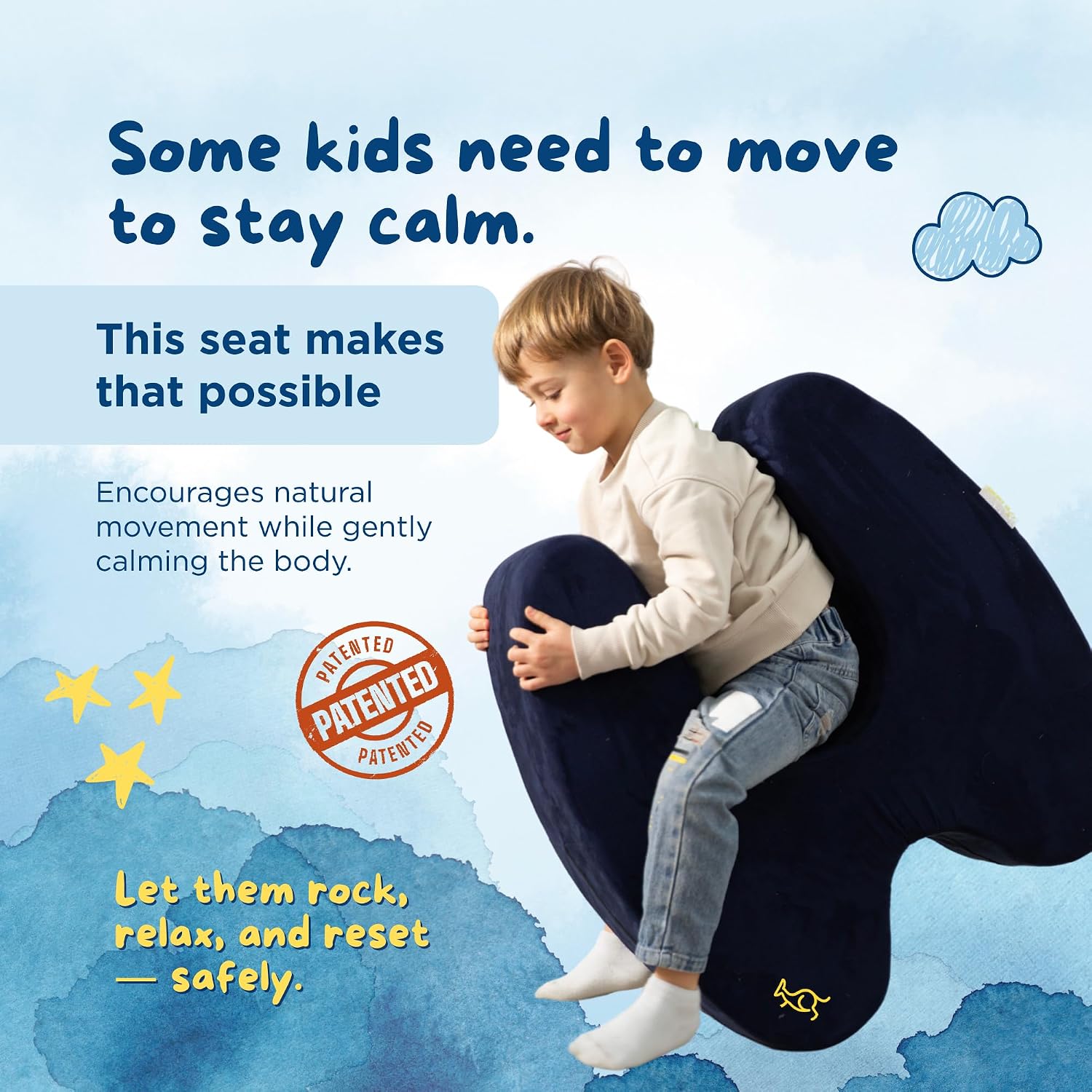
When a child with sensory processing disorder (SPD) — a condition where the brain has difficulty organizing information coming in from the senses — or ADHD cannot stay in their seat, the instinct is often to redirect behavior. But for many of these kids, the movement is the regulation. Deep pressure (firm, sustained input to muscles and joints, similar to a firm hug) and proprioceptive input (the sense of where your body is in space, fed by movement and resistance) are two of the most well-documented self-regulation supports in pediatric occupational therapy. Seating tools that deliver these inputs — compression chairs, rocking seats, and spinning stools — have moved from specialty clinics into classrooms and home settings at a rapid pace. If you are an OT, a special education coordinator, or a prosumer clinic operator currently deciding which tools to stock or specify, this guide gives you the spec-level comparison and the clinical decision logic to choose correctly the first time.
What These Tools Actually Do (and What They Don’t)
Before comparing products, the mechanism matters — because it determines who each tool serves and, critically, which kids it can backfire on.
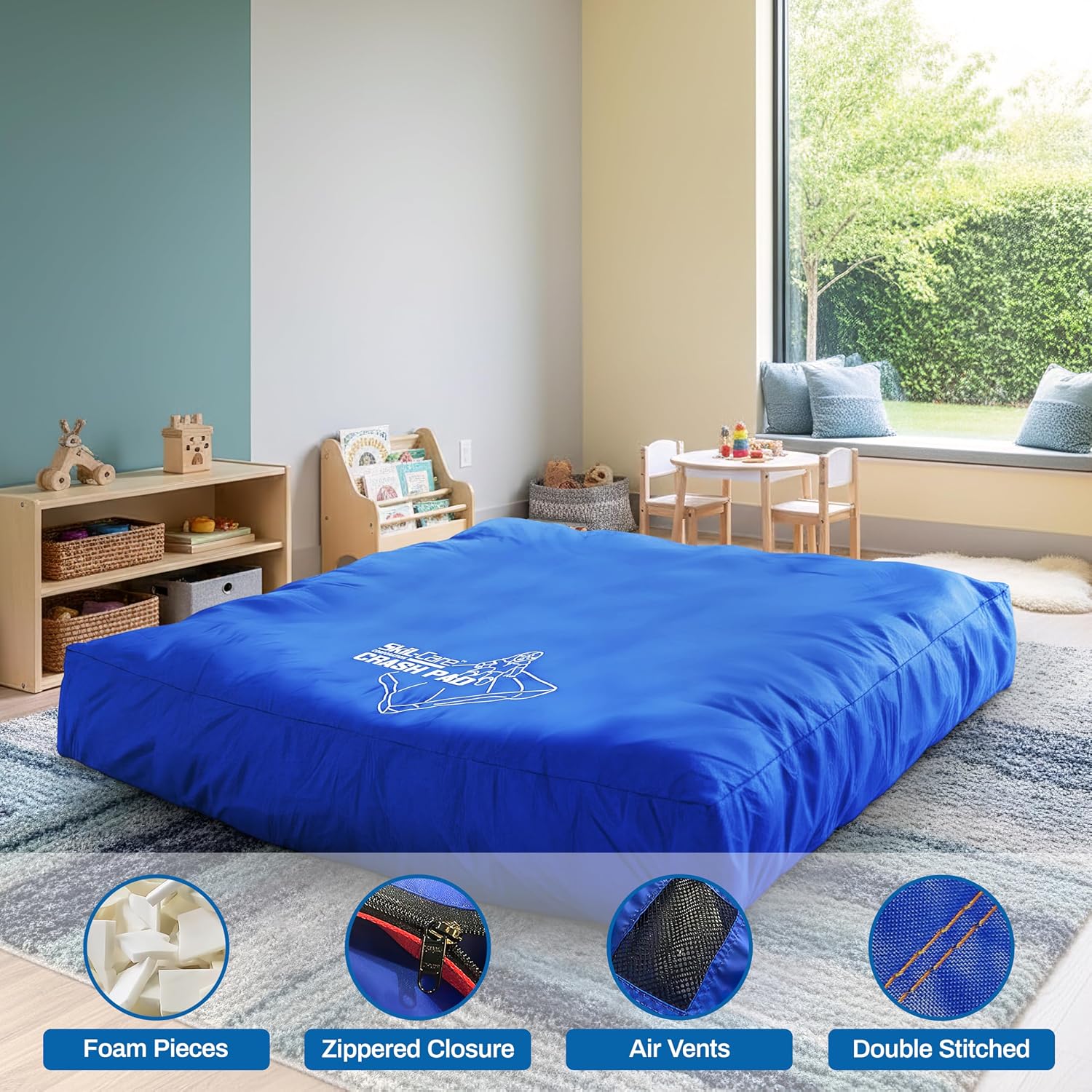
Compression seating (also called sensory compression chairs or pod chairs) wraps or encloses the child’s body, delivering lateral pressure and proprioceptive feedback through the chair walls. The sensory input is largely static — the chair pushes back rather than moving. This is the closest seated analog to a weighted vest or compression garment.
Rocking seats (saddle stools, wobble cushions, and floor rockers) provide vestibular input — stimulating the inner-ear balance system — along with low-level proprioceptive feedback from the postural adjustments the child makes to stay balanced. The net effect for many sensory seekers is increased arousal regulation and on-task behavior. Understood.org, in their overview “Sensory Processing Issues Explained,” notes that movement-based seating is frequently cited by occupational therapists as a preferred first-line classroom accommodation precisely because it requires no adult facilitation once installed.
Spinning tools (360-degree swivel stools, spinning discs, and T-stools with rotational bases) deliver primarily vestibular input with a higher arousal ceiling. They are the most powerful of the three categories and carry the most risk of dysregulation if misapplied. Autism Speaks, in their sensory resources section “Sensory Issues” at autismspeaks.org, notes that spinning is strongly preferred by some sensory seekers but actively dysregulating for sensory avoiders — a child who is already over-aroused will not be helped by a spin stool.
The clinical bottom line you need before buying: These three categories are not interchangeable. Compression ≈ calming input. Rocking ≈ alerting-to-regulating. Spinning ≈ strongly alerting. Mixing up a sensory avoider’s seating needs with a sensory seeker’s preferred input is the most common procurement mistake practitioners report.
Spec Comparison: What the Numbers Tell You
The table below summarizes decision-critical data across the three categories, drawn from published manufacturer specifications and aggregated institutional reviewer notes as of May 2026.
| Category | Typical Load Rating | Price Range (per unit) | Primary Sensory Input | Best-Fit Profile |
|---|---|---|---|---|
| Compression / Pod Chair | 150–250 lb static | $85–$320 | Deep pressure (proprioceptive) | Sensory avoiders, hyperaroused, transition anxiety |
| Rocking / Wobble Seat | 200–300 lb static | $25–$180 | Vestibular + light proprioceptive | Sensory seekers, inattentive ADHD, focus support |
| Spinning Stool / Disc | 150–265 lb static | $35–$250 | Vestibular (high-intensity) | Active sensory seekers; contraindicated for avoiders |
A few load-rating points worth internalizing before you order: static load ratings — the weight the product holds when the child is sitting still — are not the same as dynamic load ratings, which reflect the force generated during active movement such as rocking, spinning, or bouncing. Most consumer-grade wobble cushions and spinning stools are spec’d to static loads only. When a 60-pound child rocks aggressively on a wobble stool, the instantaneous force at the base can exceed two to three times body weight. Institutional buyers sourcing for school-age programs should request dynamic load data from vendors such as FlagHouse, Abilitations, or School Specialty, and should not assume a 250-pound static rating is adequate for a class of active middle-schoolers.
The IDEA Partnership, in their document “Sensory Processing and Educational Environments” available through ideapartnership.org, explicitly flags equipment durability as a compliance-adjacent concern when items are purchased under IDEA or ARP funding — failed equipment creates liability exposure and mid-year replacement budget pressure.
Product Category Deep-Dive
Compression and Pod Chairs
The compression seating market splits into two tiers with meaningfully different spec floors.
Budget-Tier Compression: Soft Pod Chairs and Cocoon Seats
Soft pod chairs and cocoon seats typically run $85–$160 from vendors such as Fun and Function or Abilitations. These are fabric-covered foam shells that partially enclose the child and provide lateral pressure from the chair walls alone. They are portable, cleanable, and appropriate for home use or classroom sensory corners. Most youth pod chairs in this range carry static ratings between 150 and 200 pounds, appropriate for K–6 populations. Operators in long-run school reviews consistently note that vinyl or nylon upholstery on mid-tier models holds up well through a full academic year in one-to-one or small-group use, but shows wear faster in unrestricted all-day classroom deployments.
Active
$19.50
In stock on Amazon
Check price on AmazonMid-Tier Compression: Structured Sensory Chairs with Reinforced Shells
Mid-tier compression chairs ($160–$220) from vendors such as Abilitations and Fun and Function use reinforced foam or semi-rigid polymer shells and carry static load ratings of 200–250 pounds. Upholstery options at this tier typically include antimicrobial vinyl, which holds up better under daily classroom use than the fabric-wrapped shells common at the budget tier. For a single-student IDEA accommodation in a general education classroom, the mid-tier option is the most defensible specification — it offers adequate durability without the premium price of clinical-grade equipment.
FERUERW
$69.99
In stock on Amazon
Check price on AmazonPremium-Tier Compression: Therapeutic-Grade and Body-Sock Seating
Therapeutic-grade compression and body-sock seating from vendors such as Southpaw Enterprises and TFH Special Needs is spec’d for dynamic clinical use and meets higher material standards required for clinic and sensory room settings. Prices in this tier range from $220 to $320 per unit. The American Occupational Therapy Association’s 2019 “Occupational Therapy Practice Guidelines for Children and Youth with Challenges in Sensory Integration and Sensory Processing,” published in the American Journal of Occupational Therapy, identifies deep pressure input as most strongly indicated for children presenting with sensory over-responsivity — hyperarousal to sensory input. For a sensory room build-out serving multiple children daily, spec the commercial grade; for a home corner setup or a single-student accommodation, the mid-tier option is defensible.
Skil-Care
$199.99
In stock on Amazon
Check price on AmazonClinical fit summary: If your current caseload skews toward children who are easily overwhelmed, transition-anxious, or who shut down under sensory load, compression chairs are your workhorse tool. They are not the right primary seat for a child who is under-responsive and needs alerting input to maintain attention.
Rocking and Wobble Seating
This is the largest product category by unit volume and the most frequently misunderstood by non-OT purchasers. Three meaningfully distinct product types exist within this category.
Budget-Tier Rocking: Wobble Cushions
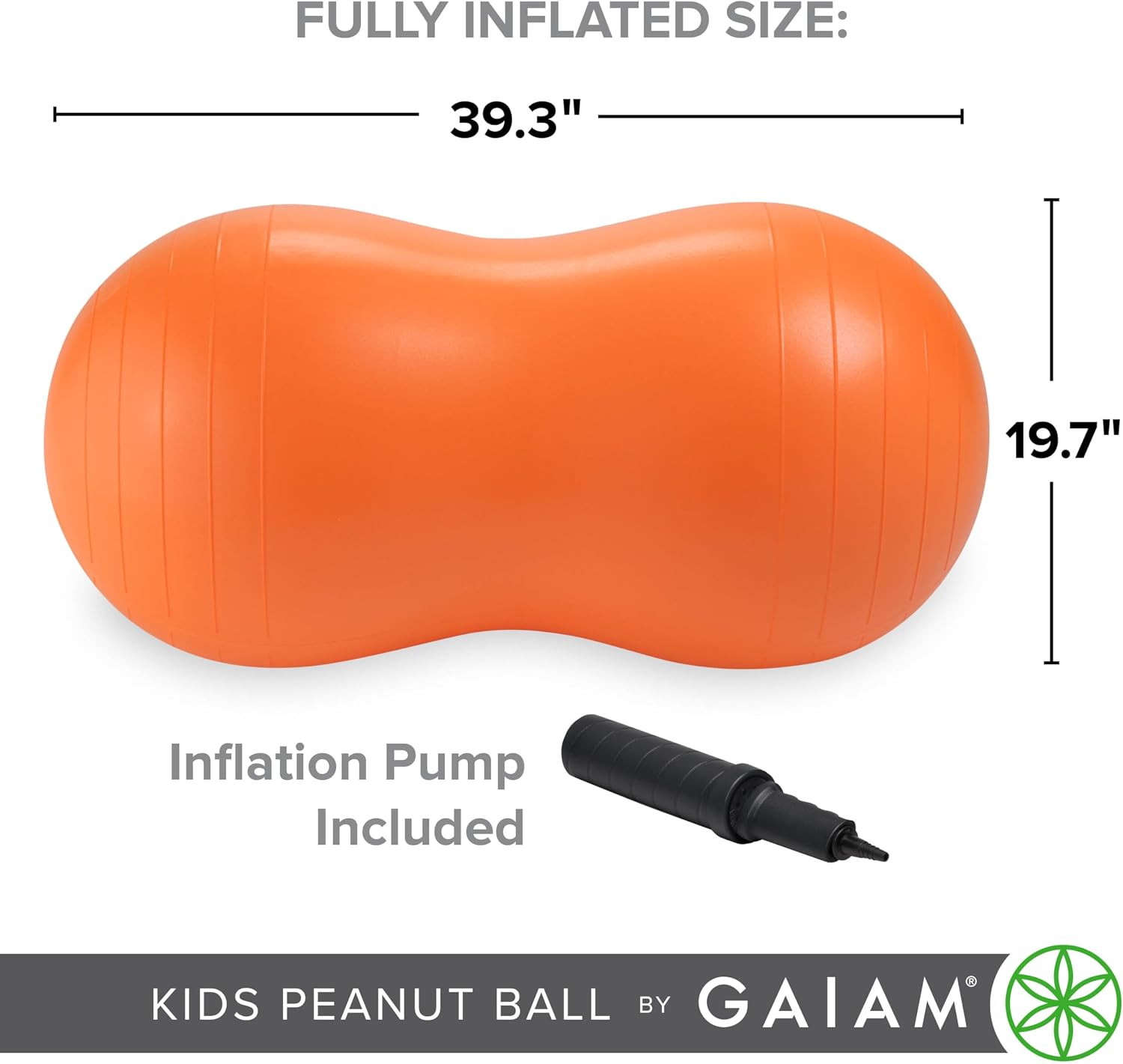
Inflatable balance-disc wobble cushions sit on top of an existing chair and provide low-amplitude movement. They cost $25–$60, are highly portable, and are the most classroom-friendly option because they require no furniture replacement. The tradeoff is that the sensory input is mild. For a child with moderate sensory-seeking behavior, a wobble cushion may not deliver enough proprioceptive feedback to produce a noticeable regulatory effect. CHADD, in their resource “Classroom Accommodations for ADHD” available at chadd.org, lists wobble cushions as a first-tier ADHD seating accommodation but notes that clinical benefit depends on the individual child’s sensory profile — not every ADHD presentation includes sensory seeking.
Active
$19.50
In stock on Amazon
Check price on AmazonMid-Tier Rocking: Floor Rockers and Structured Rocking Chairs
Structured floor rockers and youth rocking chairs deliver stronger vestibular input and also engage core postural muscles, adding proprioceptive feedback. Spec sheets from Abilitations and FlagHouse show youth rocking chairs rated at 200–250 pounds static, with arc depths ranging from three inches to eight inches. Deeper arc equals more vestibular input, which is better for active sensory seekers but a harder fit for a child who is only mildly seeking or who has motor coordination challenges. Priced in the $60–$130 range, floor rockers represent the strongest value proposition for elementary classrooms with sensory-seeking students who have outgrown wobble-cushion input.
FERUERW
$69.99
In stock on Amazon
Check price on AmazonPremium-Tier Rocking: Saddle Stools and Balance Stools
Saddle stools and balance stools — fixed-height, with rounded or pegged bases — are the most evidence-adjacent option for inattentive ADHD specifically. Research by Schaaf and colleagues, “An Intervention for Sensory Difficulties in Children with Autism,” published in the Journal of Autism and Developmental Disorders in 2014 and indexed on NCBI/PubMed, found that movement-incorporating seating was associated with improved task engagement in children with sensory processing difficulties, though the authors note that individual sensory profiles strongly moderated outcomes. Saddle stools are priced $60–$180 in the institutional market; FlagHouse and School Specialty both carry commercial-rated options with height-adjustable columns and anti-tip bases rated for school use. For older elementary and middle-school children with inattentive ADHD who have outgrown pod-chair comfort sizing, a commercial saddle stool is a well-justified line item.
Skil-Care
$199.99
In stock on Amazon
Check price on AmazonSpinning Tools
Treat this category with the most clinical caution. The mechanism — vestibular stimulation from rotation — is potent enough that the American Occupational Therapy Association’s 2019 practice guidelines, “Occupational Therapy Practice Guidelines for Children and Youth with Challenges in Sensory Integration and Sensory Processing” published in the American Journal of Occupational Therapy, flag spinning as requiring careful clinical judgment regarding duration and frequency. Spinning is not appropriate as an unsupervised all-day seating solution in a classroom without OT consultation on the child’s specific sensory profile.
That said, for a child correctly identified as a vestibular seeker — one who actively seeks spinning, rolling, and fast movement; has high arousal tolerance; and is not prone to motion sickness or seizures — a 360-degree swivel stool or spinning disc can be a meaningful regulation tool during structured work periods.
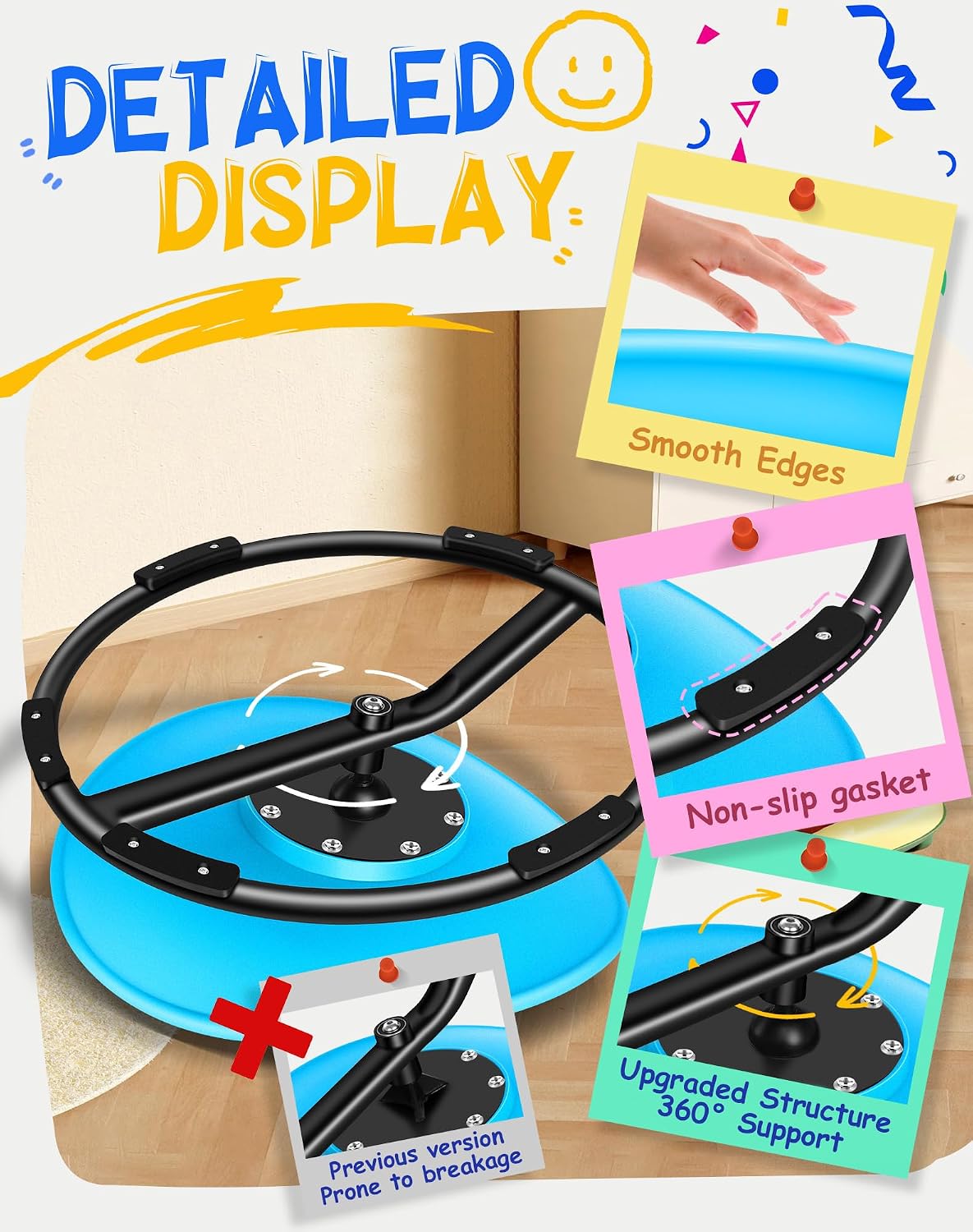
Budget-Tier Spinning: Consumer-Grade Swivel Stools
Consumer-grade swivel stools ($35–$55) use plastic bearings that wear out under daily school use within a semester. For home use with a single child, the budget option is acceptable if replaced seasonally. For any institutional setting, avoid this tier entirely; failed bearings create a safety hazard and generate mid-year replacement costs that exceed the savings at purchase.
Active
$19.50
In stock on Amazon
Check price on AmazonMid-Tier Spinning: Commercial-Grade Spinning Stools with Steel Ball-Bearing Mechanisms
Commercial-grade spinning stools with steel ball-bearing swivel mechanisms are rated for institutional use by vendors including FlagHouse and Abilitations. Expect to pay $80–$150 for a school-appropriate mid-tier spinning stool. Height-adjustable models in this range typically accommodate children from kindergarten through middle school and represent the minimum acceptable specification for any shared classroom deployment.
FERUERW
$69.99
In stock on Amazon
Check price on AmazonPremium-Tier Spinning: Therapeutic Spinning Discs and Full Rotation Platforms
Therapeutic spinning discs and full 360-degree rotation platforms ($150–$250) from clinical vendors such as Southpaw Enterprises are designed for supervised therapy sessions rather than unsupervised classroom use. They offer the widest range of motion and the most precise vestibular input, making them appropriate for sensory room inventories in clinic or therapeutic school settings where an OT can monitor duration and response.
Skil-Care
$199.99
In stock on Amazon
Check price on AmazonContraindications to flag before procurement: Autism Speaks, in their “Sensory Issues” resources at autismspeaks.org, specifically notes that some children with autism spectrum presentations are vestibular avoiders despite appearing to be sensory seekers in other modalities. Children with seizure disorders, uncontrolled vestibular sensitivity, or a history of motion sickness should not be placed on spinning tools without explicit OT clearance. Obtain a full sensory profile before purchasing spinning tools for any group setting.
Decision Rules: If X, Then Y
If you are spec’ing for a sensory room or clinic and need tools across all three input types, prioritize commercial-grade dynamic load ratings, request institutional pricing from FlagHouse or Abilitations for volume orders, and plan for at least one option per arousal tier — a calming compression pod, an alerting saddle stool, and a supervised spinning option with a clear clinical protocol.
If you are outfitting a single classroom under an IDEA accommodation plan, start with a wobble cushion or saddle stool for the identified student before investing in a compression chair. The lower-cost option generates functional data on whether movement seating alone addresses the regulatory need — and avoids locking accommodation budget into a chair that may not match the child’s sensory profile once you observe them in use. The IDEA Partnership’s “Sensory Processing and Educational Environments,” available through ideapartnership.org, is a useful reference when writing the equipment justification section of an accommodation plan.
If your caseload includes sensory avoiders or children with anxiety-adjacent sensory presentations, do not begin with spinning tools and exercise caution with deep-arc rocking chairs. Compression seating is the lower-risk starting point, with the clinical goal of calming the nervous system before introducing any movement input.
If you are a home clinic or prosumer operator with a mixed caseload, a mid-tier compression pod ($120–$180 from Fun and Function or Abilitations) plus two or three wobble cushions ($30–$50 each) covers the majority of sensory-seeking and sensory-avoiding profiles at a total investment under $350. Add a commercial saddle stool if your caseload includes older elementary and middle-school children with inattentive ADHD.
One procurement timing note: pricing from FlagHouse, School Specialty, and Abilitations on commercial-grade seating has trended upward 8–14% since 2024 on steel-component items as post-pandemic IDEA and ARP funding cycles wind down and districts shift from expansion purchases back to replacement budgets. Locking in institutional pricing agreements now, where your contract allows, is worth the administrative overhead.