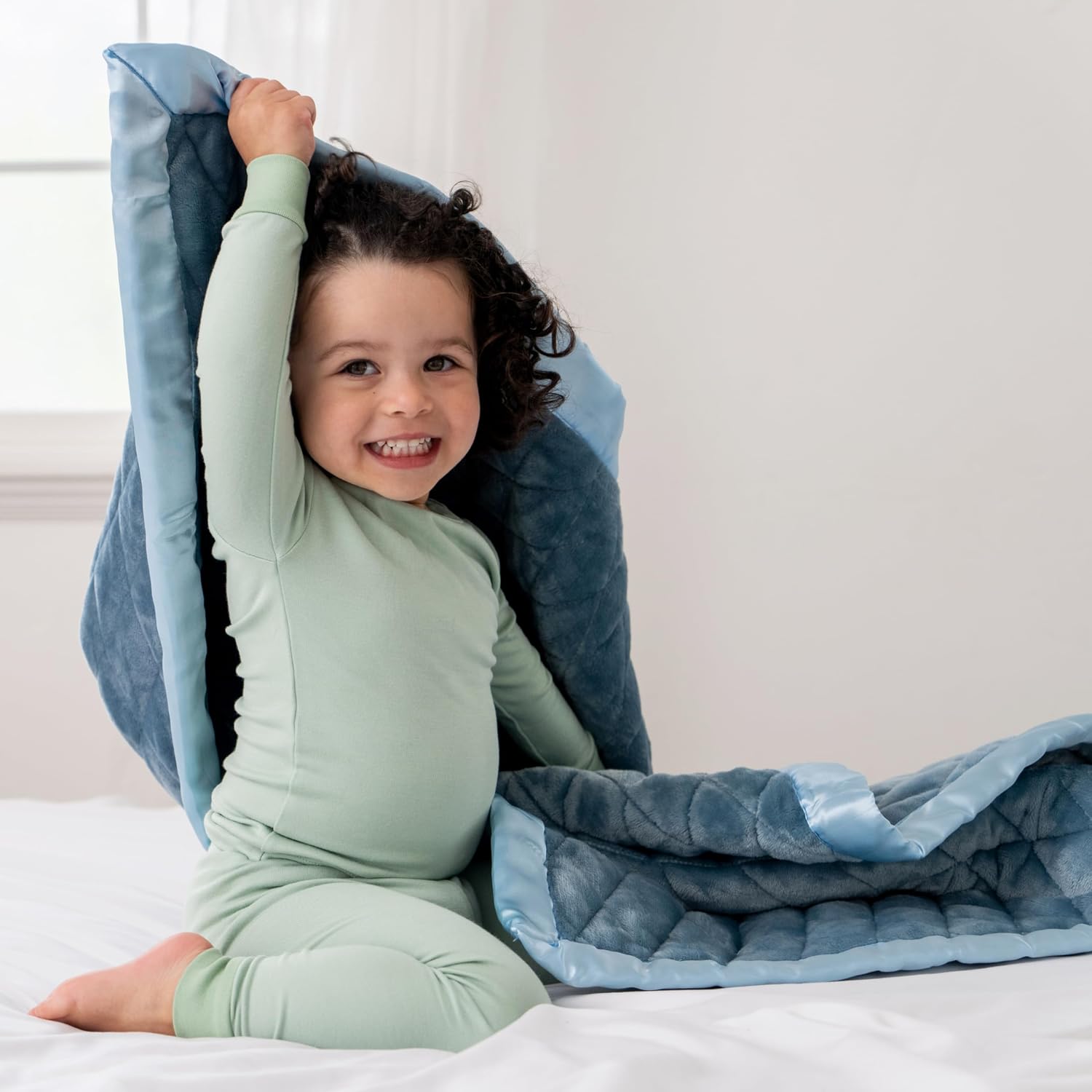
A weighted blanket is exactly what it sounds like: a blanket filled with small beads or pellets — usually glass or plastic — that adds gentle, even pressure across the body. That pressure mimics the feeling of being held or hugged, which many children with autism, ADHD, or sensory processing differences (difficulty filtering or responding to touch, sound, and movement) find deeply calming. The problem practitioners run into isn’t usually weight — it’s fabric. Fabric determines how the blanket feels against the skin, how warm or cool the child stays under it, and, critically, whether a child who is sensitive to texture will tolerate it at all. If you have a client or child who has rejected an otherwise appropriate weighted blanket, fabric is the first variable to revisit. This guide gives you a decision-ready comparison between the two dominant fabric categories in the pediatric market: cooling fabrics (typically bamboo-derived viscose, cotton-polyester blends, or moisture-wicking knits) and Minky fabric (a plush, short-pile polyester with a distinctive velvety nap), so you can stop guessing and start matching.
Why Fabric Is a Clinical Variable, Not Just a Preference
It is tempting to treat fabric selection as a comfort nicety — something parents care about and clinicians can leave to the family. That framing costs outcomes. The American Occupational Therapy Association’s Occupational Therapy Practice Guidelines for Children and Youth with Challenges in Sensory Integration and Sensory Processing (AOTA, 2019) emphasizes that tactile input is not separable from deep-pressure input when designing sensory interventions. A child who is tactile-defensive — meaning they register ordinary touch as threatening or uncomfortable — may refuse a Minky blanket because the plush pile triggers an aversive response even as the weight itself would be therapeutic. Conversely, a child who is tactile-seeking and thermoregulates poorly may reject a smooth cooling fabric because it does not provide the proprioceptive-plus-tactile feedback loop they are seeking.
The downstream consequence is real: a blanket that is not used is a wasted clinical recommendation and, for institutional buyers, a returned product that burns through per-student equipment budgets. CHADD’s ADHD and Sleep: What Parents Need to Know notes that the behavioral window for sleep-onset interventions is narrow; a child who kicks off a blanket within five minutes because the texture is wrong gets none of the deep-pressure benefit that makes weighted blankets a reasonable adjunct in the first place.
The baseline clinical question before fabric selection: Is this child a sensory seeker, a sensory avoider, or a mixed profile? Is their primary challenge thermal dysregulation, tactile sensitivity, or arousal modulation? Fabric choice follows from that — not from what looks appealing in a product photo.
Cooling Fabrics: Thermal and Tactile Performance by Budget Tier
Cooling weighted blankets typically use one of three material architectures: (1) bamboo-derived viscose or lyocell, marketed for its moisture-wicking and thermal conductivity properties; (2) cotton-polyester blends with an open-weave construction that allows airflow; or (3) phase-change material (PCM) fabrics woven with heat-absorbing polymers, found at higher price points. Understood.org’s overview of weighted blankets for children specifically notes that smooth-surface fabrics are often the recommended starting point for children who are hypersensitive to touch — a clinical rationale that maps directly onto the cooling fabric category.
Budget Cooling Blankets ($35–$65)
At the entry price point, cotton-polyester blends dominate. These are the most institutionally practical options: machine-washable, colorfast through repeated cycles, and resistant to pilling under the high-temperature laundering that school and clinic settings require. The tactile profile is smooth and flat-weave, which minimizes aversive surface variation for tactile-defensive children. Fill is typically plastic poly pellets, which are lighter per unit volume than glass and can make blankets slightly thicker for a given weight — worth noting when fitting smaller children under age six.
 product image](/images/external/0a2c6cd3d2d6.jpg)
[Sivio](https://www.amazon.com/dp/B0F32WWG4W?tag=greenflower20-20)
$25.26
In stock on Amazon
Check price on AmazonMid-Tier Cooling Blankets ($60–$110)
This band is where bamboo-derived viscose and lyocell fabrics appear most reliably. Bamboo-viscose is genuinely more thermally conductive than standard polyester, meaning it draws heat away from the body faster — owners across aggregated reviews consistently report that children who run hot, sweat through the night, or live in warm climates tolerate these fabrics through longer sleep sessions. Fill at this tier shifts predominantly to glass beads, which distribute weight more evenly and lie flatter, reducing the quilted-loft effect that can trap heat at the pellet pockets. For children with mixed profiles — some tactile sensitivity, some thermal dysregulation — bamboo-viscose mid-tier blankets are the most clinically flexible starting point.
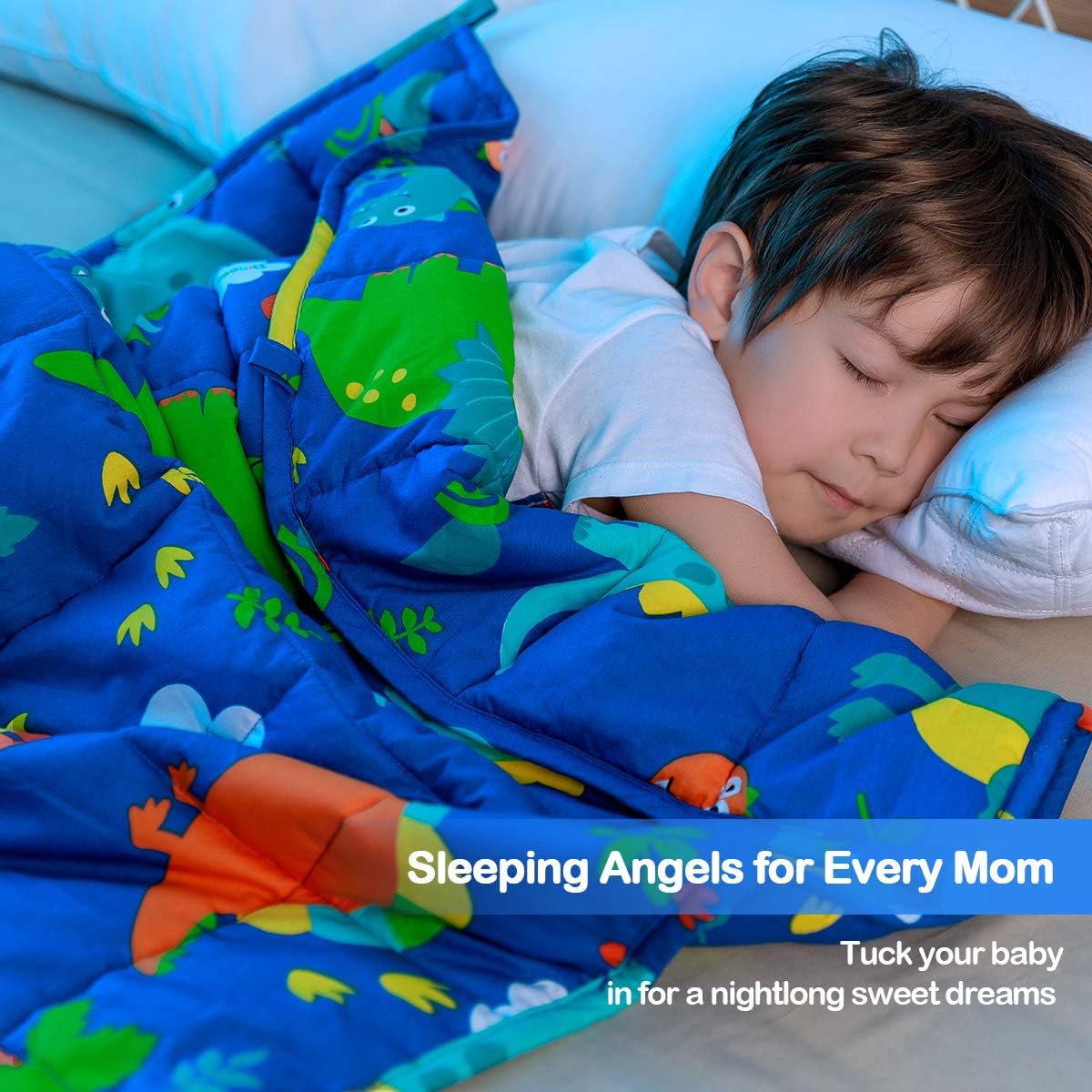
Sivio
$26.59
In stock on Amazon
Check price on AmazonPremium Cooling Blankets ($90–$180)
Phase-change material (PCM) fabrics and advanced moisture-wicking knits occupy the premium tier. PCM fabrics are woven with heat-absorbing polymers that actively buffer skin temperature rather than simply conducting heat away. Independent textile testing to verify manufacturer thermal claims at this tier is limited, so buyer scrutiny of spec sheets is warranted. That said, for children with chronic, documented thermoregulatory disruption — a compounding factor in sleep-onset and sleep-maintenance problems specifically flagged in the American Academy of Pediatrics’ review of sleep in children with autism spectrum disorder (Pediatrics, 2020, American Academy of Pediatrics) — the added thermal performance at this tier can justify the cost when lower-tier options have already failed.
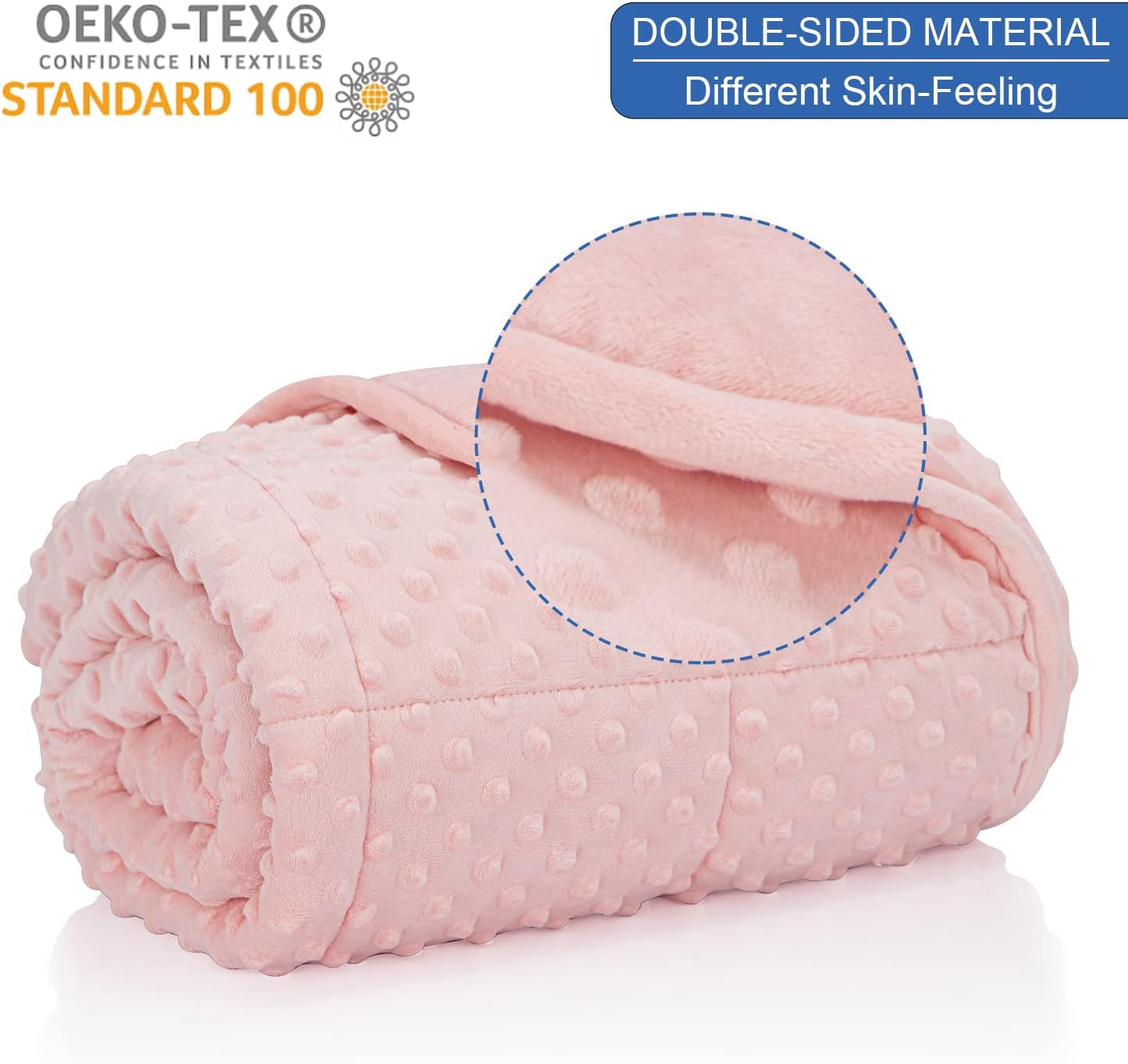
Huloo
$45.99
In stock on Amazon
Check price on AmazonMinky Fabric: Where the Plush Pays Off (and Where It Backfires)
Minky is a branded fabric category — a short-pile, high-loft polyester fleece with a distinctive velvety hand. It is not proprietary to one manufacturer; dozens of weighted blanket producers use Minky or equivalent pile fabrics. What makes it clinically interesting is the dual sensory input: the weight delivers deep pressure (proprioceptive input — the sensation muscles and joints feel when pressed), while the plush nap delivers light-touch stimulation simultaneously.
Budget Minky Blankets ($35–$60)
Entry-tier Minky blankets use thinner pile depths and lighter polyester constructions. The tactile experience is softer than cotton-poly cooling fabrics but less lush than mid-tier Minky; some children who are seeking strong pile stimulation find this tier underwhelming. Fill is typically plastic pellets. The primary clinical use case at this price point is a low-stakes trial for families uncertain whether their child will accept Minky texture at all — if the child rejects the pile, the financial loss is contained. Durability under institutional laundering is limited; pile begins matting noticeably after approximately 20–30 high-heat wash cycles.
Sivio
$25.26
In stock on Amazon
Check price on AmazonMid-Tier Minky Blankets ($55–$95)
This is where Minky weighted blankets show their strongest clinical case. Autism Speaks’ sensory resource hub (Autism Speaks — Sensory Issues) notes that children who engage in repeated tactile-seeking behaviors often benefit from enriched tactile environments; mid-tier Minky provides that enrichment within the blanket itself, which can reduce the need for the child to seek additional stimulation elsewhere during wind-down routines. Fill at this tier is typically glass beads with closer quilting, improving weight distribution. The thermal liability, however, becomes more pronounced: Minky’s loft traps air and retains heat. For children who already struggle with thermoregulation or who live in warm climates without consistent air conditioning, mid-tier Minky blankets frequently generate night-waking due to overheating — even when weight is correctly calibrated.
Sivio
$26.59
In stock on Amazon
Check price on AmazonPremium and Dual-Sided Minky Blankets ($65–$130)
A small but growing segment of mid-to-premium manufacturers now produce dual-sided blankets with a Minky face and a bamboo-viscose or cotton reverse. This is not a gimmick; it gives the child and caregiver a functional toggle between sensory modes without purchasing two separate products. For children whose profiles are genuinely mixed — some tactile seeking, some thermal sensitivity — dual-sided construction is the most clinically efficient specification. Institutional buyers should still confirm pile durability under repeated washing before committing to shared-use procurement; even premium Minky pile degrades faster than woven cooling fabrics under high-frequency laundering.
Huloo
$45.99
In stock on Amazon
Check price on AmazonThe Decision Framework: Matching Fabric to Sensory Profile
The following if/then logic covers the majority of pediatric use cases for practitioners making a clinical recommendation, writing a therapy note, or advising a family navigating an online marketplace.
If the child is tactile-defensive (hypersensitive to touch): → Start with a smooth cooling fabric — cotton-poly or bamboo viscose. Introduce slowly. Minky is a secondary trial only if the child reaches full tolerance on the smooth version and begins seeking additional tactile input.
If the child is tactile-seeking and not a warm sleeper: → Minky is the higher-engagement option. The dual tactile-plus-proprioceptive input is clinically aligned with what the child is seeking. Monitor pile degradation if the blanket enters a shared-use setting.
If the child has documented sleep-temperature problems or lives in a warm climate without consistent air conditioning: → Cooling fabric is the clinical default regardless of tactile profile. The American Academy of Pediatrics’ review of sleep in children with autism spectrum disorder (Pediatrics, 2020) specifically identifies thermoregulatory disruption as a compounding factor in sleep-onset and sleep-maintenance problems; overheating will override any deep-pressure benefit.
If you are specifying for a sensory room, clinic, or shared school environment: → Cooling fabric with a cotton-polyester or cotton-bamboo construction is the practical specification — it survives institutional laundering, resists matting, and is easier to keep within infection-control protocols. Minky is a home-use product in most institutional contexts.
If the child’s profile is genuinely mixed: → Look for dual-sided products (Minky face, bamboo-viscose or cotton reverse) in the $65–$130 range for pediatric weights.
One clarification that surfaces repeatedly in practitioner settings: the 10% body-weight rule (the widely cited guideline suggesting a weighted blanket weigh approximately 10% of the user’s body weight) is a starting heuristic, not a clinical ceiling. Per the AOTA’s Occupational Therapy Practice Guidelines for Children and Youth with Challenges in Sensory Integration and Sensory Processing (2019) and the broader sensory integration literature, children with very low body weight, active seizure disorders, or sensory-avoidance profiles may need significantly lighter options — sometimes as low as 5% of body weight — or may not be appropriate candidates for weighted blankets at all. Confirm weight first, then optimize fabric.
Practical Sourcing Notes for Mid-2026
The pediatric weighted blanket market has consolidated around a handful of mid-tier brands at the $40–$120 price point typical for clinical recommendation. Institutional buyers procuring through distributor catalogs should confirm fabric specifications in writing before finalizing purchase orders — product listings frequently change fill materials or fabric constructions between catalog editions without updating the product name, which creates a mismatch between what is specified in an IEP or therapy plan and what is delivered.
For home-use recommendations to families: a clearly documented fabric rationale in your session notes protects your recommendation if the family purchases independently and selects the wrong variant. Naming the fabric type — for example, “smooth cotton or bamboo-viscose face, not plush or pile” — is more useful to a non-specialist parent navigating an online marketplace than naming a specific product SKU.
Fabric is not the whole answer — but it is frequently the variable that determines whether a clinically appropriate weighted blanket actually gets used. Get it right the first time, and the intervention has a chance. Get it wrong, and you are troubleshooting a rejection instead of measuring progress.