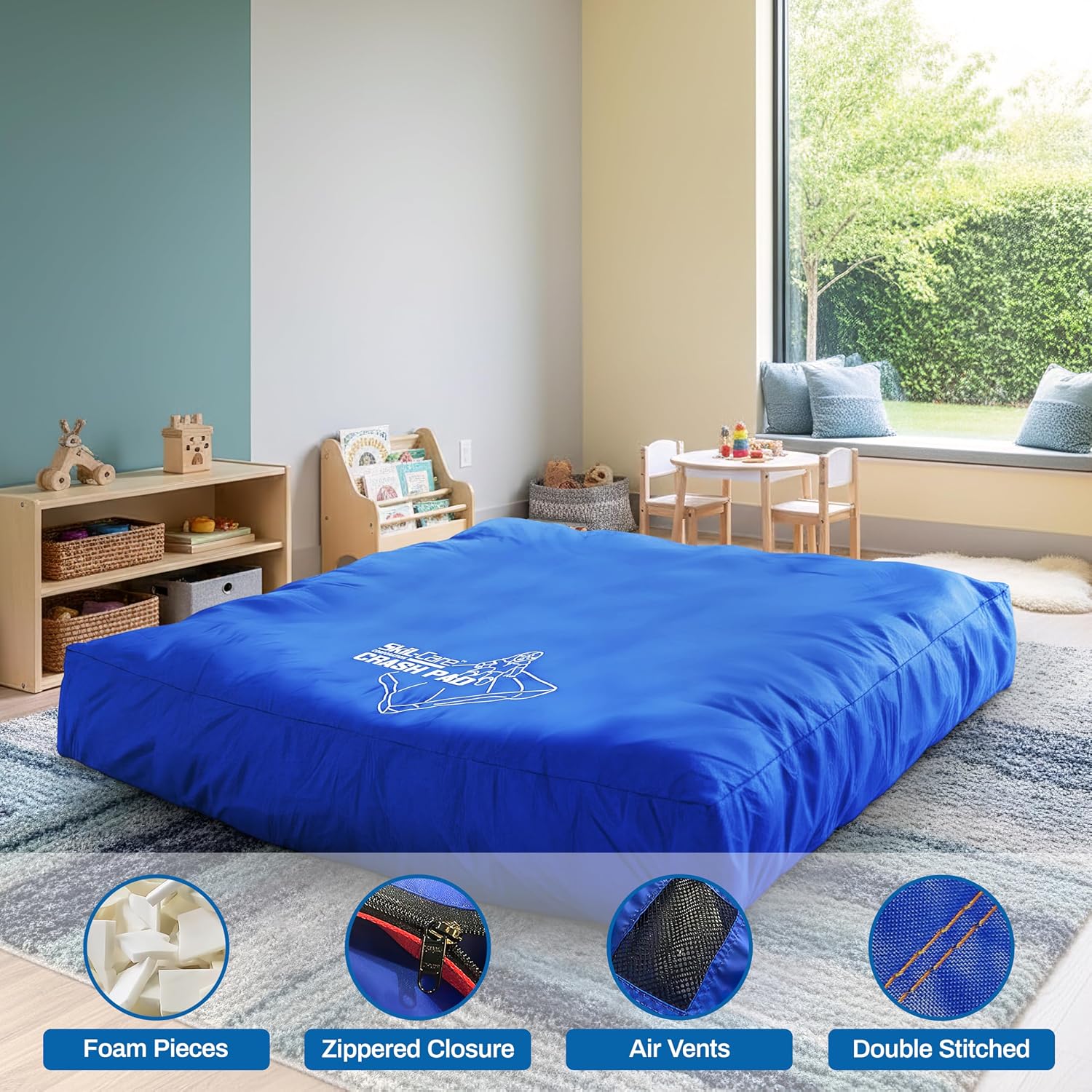
A sensory room is a dedicated space — typically 150 to 400 square feet — filled with equipment designed to help children regulate their nervous systems. “Regulation” means reaching a calm, focused state from which learning is possible. For students with autism, ADHD, sensory processing disorder, or other disabilities, a well-equipped sensory room can reduce meltdowns, improve attention, and support participation in the general education classroom. Two federal funding streams are most commonly used to pay for them: IDEA (Individuals with Disabilities Education Act), which provides formula-based grants to districts for serving students with documented disabilities, and ARP ESSER III (the American Rescue Plan’s Elementary and Secondary School Emergency Relief fund), which allocated one-time pandemic-recovery dollars that many districts are still obligating through extended spend-down periods. If you’re a special education coordinator, OT department head, or facilities planner with a budget line approved and a vendor shortlist open, this guide is designed to give you a working allocation model, the tradeoffs that actually matter at each price tier, and a clear decision rule for the choices that trip up most first-time builds.
How IDEA and ARP Funds Actually Constrain Your Build
Understanding the funding mechanics prevents the most common budget mistake: treating a grant ceiling as a shopping cart limit rather than a compliance framework.
IDEA Part B funds flow to districts as formula grants tied to child count. Per 34 CFR Part 300, allowable uses include equipment, facilities modifications, and contracted services that are directly tied to providing a free appropriate public education (FAPE) to students with IEPs (Individualized Education Programs — legally binding plans specifying each student’s services). A sensory room qualifies when it is documented in students’ IEPs as a related service setting or a supplementary aid and service. The IDEA Partnership’s 2022 guidance on multi-tiered systems of support confirms that environmental modifications supporting IEP goals are an allowable capital expenditure. Critical constraint: IDEA funds must benefit identified students. A room used primarily for general-ed calming corners may fail a compliance audit if it isn’t IEP-linked.
ARP ESSER III has a broader mandate — addressing learning loss and student mental health — which means a shared sensory space serving both IEP students and general-ed students with anxiety or trauma histories is more defensible here. The U.S. Department of Education’s ESSER III guidance document (2021) explicitly names “physical school environment” improvements as allowable. The practical constraint: most districts must obligate these funds by a state-set deadline (many states set September 2026 as a hard close-out), which compresses procurement timelines and makes turnkey vendor packages more attractive than phased builds.
The spend-down math: If your IDEA allocation for sensory equipment is $8,000 and your ARP line is $6,000, you have $14,000 — but you cannot freely blend them. Line items on each PO should map to the correct funding source, with the IDEA-funded items clearly tied to IEP-documented students. Work with your district’s grants coordinator before issuing any RFP (Request for Proposal).
Budget Allocation: A Working Model for $5,000–$15,000 Builds
The ranges below are based on published vendor pricing from FlagHouse, Abilitations, and School Specialty as of Q1 2026, cross-referenced against spec sheets for commercial-grade equipment. These are not exhaustive lists — they are allocation anchors.
By the Numbers: Suggested Budget Brackets
| Build Tier | Total Budget | Structural/Install | Core Equipment | Sensory Lighting | Soft Furnishings |
|---|---|---|---|---|---|
| Starter | $5,000–$7,500 | $800–$1,200 | $2,500–$3,500 | $600–$1,000 | $700–$1,200 |
| Mid-Tier | $8,000–$11,000 | $1,200–$2,000 | $4,000–$5,500 | $1,000–$1,800 | $1,000–$1,800 |
| Full Build | $12,000–$15,000 | $2,000–$3,500 | $5,500–$7,000 | $1,800–$2,500 | $1,800–$2,500 |
What “structural/install” means here: ceiling-mount swing hardware, stud-blocking, anchor plates, and contractor labor. This is the line item most coordinators underbudget. A Southpaw Enterprises or TFH Special Needs ceiling-mount swing system is rated for dynamic loads — meaning the weight of a moving child, which can be 1.5–2× the child’s static (standing) body weight — and must be installed into structural framing, not drywall. If your quote doesn’t include a licensed contractor’s labor, add 15–20% of the hardware cost. The U.S. Department of Education does not restrict IDEA or ESSER funds from covering installation as part of an equipment project, provided the installation is necessary for the equipment to function.
Core Equipment Priorities by Tier
Starter ($5,000–$7,500): At this ceiling, prioritize one ceiling-mount swing with a proprioceptive (deep-pressure, body-awareness) net or platform seat, one weighted compression tool (lap pad or vest, not a full blanket), a basic fiber-optic light strand set, and floor-level crash padding. FlagHouse’s catalog lists entry-level platform swings in the $350–$500 range; Abilitations offers comparable options. Do not try to build a complete snoezelen environment (a multi-sensory immersive room with coordinated lighting, sound, and tactile stations) at this tier — you’ll produce an incomplete version of everything and an excellent version of nothing.
Mid-Tier ($8,000–$11,000): This tier allows a dual-swing configuration or a swing plus a separate vestibular (balance and movement) platform, a projector-based or LED bubble tube lighting system, and a defined quiet corner with a canopy, weighted blanket, and tactile wall panels. School Specialty’s Abilitations brand publishes load ratings for their swing hardware; spec sheets for commercial-grade swings in this tier typically show 250–300 lb static load ratings. Ask vendors explicitly for the dynamic load rating, which accounts for swing momentum. A 300 lb static rating may correspond to a 150–200 lb dynamic rating — meaning a 90 lb child swinging vigorously is operating near or at the dynamic ceiling. Per published manufacturer documentation from TFH Special Needs, their commercial swing frames are rated for continuous dynamic use in school settings; confirm the same from any vendor you’re evaluating.
Full Build ($12,000–$15,000): At this level you can spec a modular snoezelen layout with ceiling-mount swing, vestibular platform, fiber-optic curtain or projector system, integrated sound panel, bubble tube, weighted equipment station, and tactile wall. FlagHouse’s institutional catalog (2025–2026 edition) includes turnkey sensory room packages in the $11,000–$14,500 range with itemized component lists — useful for grant documentation because each line item can be mapped to a specific IEP goal domain (sensory processing, motor planning, emotional regulation).
Vendor Comparison: FlagHouse vs. Abilitations vs. School Specialty
These three vendors dominate institutional school sensory supply as of mid-2026. Corporate consolidation has blurred some lines — School Specialty owns Abilitations — so pricing and inventory can overlap, but catalog differences remain meaningful.
FlagHouse has historically been the preferred vendor for districts running larger builds. Their institutional sales team offers itemized quotes, GSA-comparable contract pricing in many states, and direct coordination with grant administrators. Published lead times as of Q1 2026 run 6–10 weeks for swing hardware and 3–5 weeks for soft goods. If your ARP obligate-by deadline is September 2026, a May or June PO is workable but leaves little margin.
Abilitations (via School Specialty) is stronger at the $200–$3,000 prosumer tier and offers more flexible minimum order quantities, which matters if you’re supplementing a partial build. School Specialty’s state contract pricing is available in most states through cooperative purchasing agreements (e.g., TIPS, Sourcewell, or NJPA/OMNIA Partners), which can simplify procurement for districts that need to avoid a formal public bid for purchases under their state’s threshold. Per the IDEA Partnership’s procurement guidance, using a pre-bid cooperative contract is a compliant procurement method for IDEA-funded purchases in most states — confirm with your grants coordinator.
Tradeoff to name explicitly: FlagHouse’s turnkey packages bundle installation support documentation; Abilitations line-item purchases give you more control over component selection but require you to assemble your own spec sheet for compliance documentation. For a first-time build, the documentation burden of a self-assembled spec sheet is real. For a second or third build where you have a template, line-item purchasing often yields 10–18% cost savings on equivalent equipment.
The Spec Mistakes That Sink Builds
1. Ignoring dynamic vs. static load ratings. As noted above, a swing rated 300 lb static may have a 150–180 lb dynamic limit. The AOTA’s Occupational Therapy Practice Framework (4th edition) describes vestibular input as a primary therapeutic modality for sensory processing — meaning swings will be used actively and vigorously. Spec the dynamic rating, not the static one, and verify it in writing from the vendor before PO issuance.
2. Underspeccing the weighted blanket weight range. The commonly cited 10% of body weight guideline for weighted blankets has documented exceptions. Per guidance from the American Academy of Pediatrics (AAP) and occupational therapy clinical literature indexed on ncbi.nlm.nih.gov, children under 50 lbs, children with seizure disorders, and children who are sensory avoiders (hypersensitive rather than hyposensitive to input) may require lighter weights or may be contraindicated for weighted blankets entirely. A blanket that is appropriate for a 90 lb child with hyposensitivity is not a default recommendation for all IEP students. Build your equipment list around your specific population’s documented profiles, not a catalog’s default weight chart.
3. Forgetting acoustics. A sensory room adjacent to a gymnasium or cafeteria without acoustic wall treatment will be functionally unusable for students with auditory hypersensitivity. Acoustic panels are an allowable IDEA/ARP expenditure when documented as necessary for the room’s therapeutic function. Budget $400–$900 for basic acoustic treatment at the starter tier; it protects the investment in everything else.
4. No maintenance line in the grant budget. IDEA funds can cover initial equipment but may not cover replacement parts or annual inspection of swing hardware in subsequent years. Some ARP packages allow a maintenance reserve if documented in the original grant narrative. The time to build this in is before the grant narrative is finalized, not after the equipment is installed.
Decision Rules: If X, Then Y
Use these to resolve the tradeoffs you’re likely sitting with right now:
-
If your total budget is under $7,500: Prioritize one swing system (correctly installed) over a broad array of small items. A single high-quality proprioceptive swing with proper structural mounting delivers more documented therapeutic value per dollar than six low-cost sensory tools spread across the room.
-
If your ARP deadline is within four months: Issue the PO to a vendor with cooperative contract pricing (Sourcewell, TIPS, or state equivalent) this week. Six-to-ten-week lead times plus two to three weeks for installation mean you have almost no margin. Turnkey packages beat self-assembled spec lists on timeline.
-
If you’re deciding between FlagHouse turnkey and Abilitations line-item: If this is your first build and you have limited internal staff time for compliance documentation, FlagHouse’s bundled documentation support is worth the 10–15% premium. If you have a prior build’s documentation as a template and a dedicated grants coordinator, line-item purchasing from Abilitations/School Specialty on a co-op contract will save real money.
-
If swing hardware installation is contested in your district’s facilities budget: Get the vendor’s published dynamic load rating in writing, share it with your facilities director, and frame the structural install as a liability issue, not a preference. A swing anchor that fails is a workers’ comp and district liability event. Framed correctly, the $800–$1,200 install cost is risk mitigation, not discretionary spending.
-
If your population includes seizure disorders or students under 50 lbs: Remove weighted blankets from the equipment list and redirect that budget to proprioceptive compression vests with documented weight ranges, reviewed against each student’s OT assessment. Document the clinical rationale in the grant narrative.
The grant window is real and the compliance stakes are real — but the build is entirely achievable with a clear allocation model and a vendor relationship that supports your documentation. Get the swing hardware spec sheet, confirm cooperative contract eligibility, and issue the PO before the fiscal quarter turns.