Lighting is one of the most powerful — and most overlooked — variables in a sensory room. A sensory room is a dedicated space designed to help children (or adults) with autism, ADHD, or sensory processing disorder (SPD) regulate their nervous systems. SPD is a condition where the brain has difficulty receiving and responding to information that comes in through the senses — light, sound, touch, and movement. The right lighting can shift a dysregulated child into a calm, focused state in minutes. The wrong lighting — fluorescent overhead fixtures, strobing cheap LEDs, or a projector that hums at 60 Hz — can do the opposite. This guide walks through every major lighting tier, names the tradeoffs honestly, and ends with a clear decision framework you can apply to your current project.
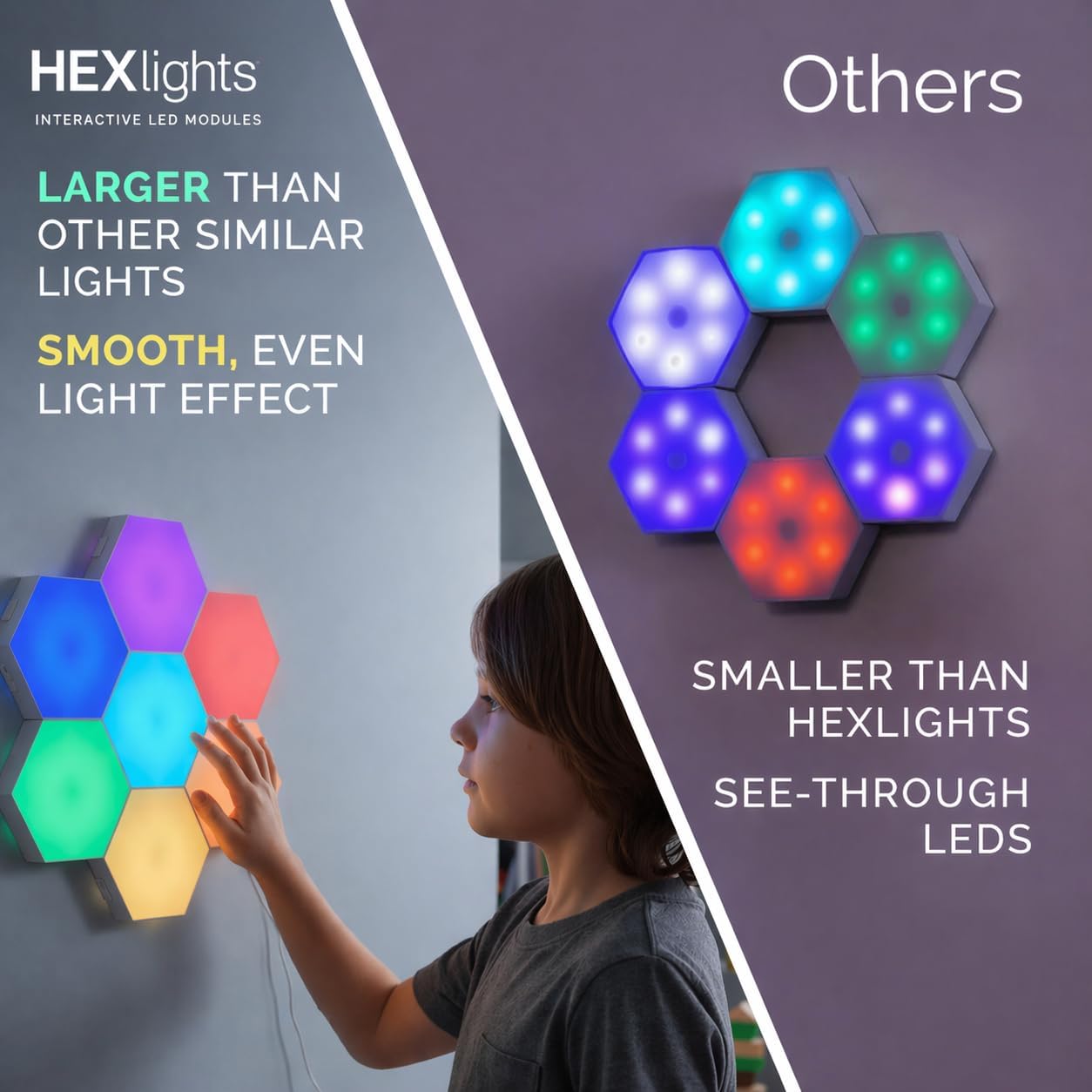
| EDITOR'S PICKMusic Sync LED Wall Lights | Mid-tier[Emberela HEXlights Sensory Ligh…](https://www.amazon.com/dp/B0BCPNQDPD?tag=greenflower20-20) | Budget pickCalming Sensory Lights | |
|---|---|---|---|
| Controls | App, USB | Remote | — |
| Quantity | 10 | 7 | 1 |
| Colors | RGB | — | 15 |
| Sound active | ✓ | — | — |
| Price | $62.17 | $59.99 | $9.99 |
| See on Amazon → | See on Amazon → | See on Amazon → |
Why Lighting Type Matters More Than Brightness Level
Most practitioners intuitively know to dim the lights. What’s less intuitive is which kind of light is being dimmed, and whether “dim” is the right intervention at all for a given client profile.
Research indexed in NCBI supports the clinical observation that many autistic individuals show heightened sensitivity to fluorescent flicker — the rapid on-off cycling of standard fluorescent tubes, typically at 100–120 Hz in North American fixtures. Even when this flicker is imperceptible to neurotypical observers, it can register as visual noise for individuals with sensory hypersensitivity. Baker and Richdale’s 2015 review of light sensitivity in autism spectrum disorder (accessible via NCBI) found self-reported fluorescent sensitivity appearing in a meaningful subset of autistic participants across multiple studies.
The AOTA’s Occupational Therapy Practice Framework (OTPF-4) frames the sensory environment as a performance context — meaning the physical environment is not background scenery but an active ingredient in client outcomes. Per AOTA guidance, practitioners are expected to analyze and modify sensory contexts, including lighting, as a core occupational therapy intervention.
The clinical implication: lighting selection is a therapeutic decision, not an aesthetic one. A $10 ocean projector and a $1,400 programmable LED panel array are both “sensory lights,” but they serve different client profiles, clinical goals, and installation contexts. The mistake most practitioners make in mid-build is choosing a tier based on budget alone rather than client need first, budget second.
The Four Lighting Tiers: What You’re Actually Buying
Tier 1 — Consumer Projectors ($10–$80)
Ocean-wave projectors, star projectors, and galaxy lights fall here. These are injection-molded consumer devices with an LED bulb behind a rotating or static lens, projecting a soft pattern onto walls and ceilings. The effect is immediately calming for many hypersensitive clients — low lux output (lux is a measure of light intensity; a standard office is roughly 300–500 lux, while these projectors often produce 5–30 lux at wall distance), gentle movement, no overhead glare.
What they’re good for: Bedroom corners, home carry-over environments, small family-funded calming corners. Understood.org’s sensory processing resource library consistently references projectors as a first-entry tool for parents. They’re also useful for practitioners who need a mobile calming option for home visits.
Honest tradeoffs:
- No flicker control — many run their LEDs at the same 60 Hz PWM dimming that can trigger sensitivity.
- No color temperature control. Most are fixed blue-green spectrum. Some clients with sensory hyposensitivity (who need more input to feel regulated) need warmer, more stimulating light, and these can’t deliver it.
- Durability: typically rated for 10,000–30,000 hours at consumer grade, which sounds long until the plastic lens discolors or the rotation motor seizes at month eight.
- Not institutionally specifiable. No ASTM or UL documentation, no warranty chain, no compliance paper trail for IDEA-funded purchases.
Decision rule: If your client’s family is self-funding and the goal is a low-cost bedtime transition tool or portable calming aide, a Tier 1 projector is the right answer. Do not specify these for clinical or institutional environments.
Tier 2 — Mid-Range Sensory Lighting ($80–$400)
This tier includes purpose-built sensory room fixtures from vendors like TFH Special Needs, Fun and Function, and Abilitations — fiber-optic tails, LED bubble tubes, and color-changing panel lights with wired remote controls. Fiber optic strands (bundles of hair-thin plastic or glass fibers that carry light from a single source) are particularly well regarded clinically because the light source itself is remote — the strands glow softly but the driving LED is hidden, eliminating direct eye exposure and reducing flicker risk.
By the numbers:
- TFH fiber optic bundles: typically 150–250 individual strands, 6–8 ft length, rated for a single central light source that can be swapped when it burns out
- LED bubble tubes (Abilitations/FlagHouse catalog, 2025–2026): typically 40–60 inches tall, 15–20 lbs, require dedicated outlet, some models include built-in sound response
- Lux output at 1 meter: typically 10–50 lux (fiber optic), 20–80 lux (bubble tube ambient)
What they’re good for: OT clinic treatment rooms, school calming corners with dedicated wall outlet access, pediatric therapy waiting areas. These fixtures appear in IDEA Partnership guidance on multisensory (also called snoezelen) environments as appropriate for small-group school settings.
Honest tradeoffs:
- Bubble tubes require plumbing-style installation if liquid-filled; some are air-bubble units that are simpler but less visually rich.
- Fiber optic units need the central illuminator replaced every 2–4 years depending on use intensity — factor that into total cost of ownership.
- Color programmability is limited; most operate via remote with 8–16 preset colors and basic slow/fast cycle modes. You can’t easily integrate them into a master sensory room controller.
- Still not specifiable as primary lighting — they supplement, not replace, ambient light sources.
Decision rule: If you’re outfitting a dedicated therapy room and need clinical-grade durability without a five-figure budget, Tier 2 is your primary sensory layer. Budget for the illuminator replacement cycle.
Tier 3 — Commercial LED Panel Systems ($400–$2,000)
This is where lighting becomes programmable and integrable. Vendors including FlagHouse, Southpaw Enterprises, and specialist snoezelen suppliers now offer DMX-controlled (DMX is a professional lighting control protocol — the same standard used in theatrical stage lighting) LED ceiling panels and wall panels that can be programmed with scenes, fades, and sequences. Color temperature is fully adjustable from warm amber (~2700K) to cool daylight (~6500K). Flicker is eliminated in quality units because they operate at 20,000 Hz or higher PWM frequencies, well above the threshold of human perception.
The clinical advantage here is protocol flexibility. An Autism Speaks sensory resource overview notes that lighting needs differ significantly between sensory avoiders (who need low stimulation, warm hues, minimal movement) and sensory seekers (who may benefit from dynamic color cycling and higher contrast). A programmable panel system lets practitioners dial in a specific scene for a specific client and save it — the next therapist who works with that child walks in, selects “Max — deep pressure + warm scene,” and the environment is already set.
Honest tradeoffs:
- Requires installation expertise. DMX wiring is low-voltage but needs correct daisy-chain topology; most school maintenance departments are not familiar with it. Budget $300–$800 for electrician and integrator time on top of hardware.
- Vendor lock-in is real. FlagHouse and Southpaw both offer proprietary controllers that work with their fixtures but not necessarily with third-party DMX equipment. Confirm compatibility before specifying.
- Total delivered cost often lands $1,200–$3,500 for a full room lighting scheme once installation is included — which is either a bargain (institutional buyers on IDEA funding) or a hard stop (private practice operators).
Decision rule: If you’re specifying a permanent dedicated sensory room for a school district, pediatric hospital, or multi-therapist clinic, Tier 3 is the minimum ceiling. The protocol flexibility directly supports individualized programming — which is both a clinical best practice and a defensible line item in IDEA documentation.
Tier 4 — Integrated Sensory Room Systems ($5,000–$15,000+)
Full snoezelen room packages from FlagHouse, TFH, or custom integrators include Tier 3 lighting bundled with ceiling-mount projector systems, interactive floor panels, and a unified iPad or touchscreen controller. Lighting here is just one module in a larger ecosystem. The value is interoperability and single-vendor accountability — one support contract, one warranty chain.
The IDEA Partnership’s guidance on multisensory environments in schools explicitly identifies these turnkey systems as appropriate for school district procurement under IDEA Part B funding, provided the IEP (Individualized Education Program) team documents the sensory environment as educationally necessary for specific students.
Honest tradeoffs at this tier:
- FlagHouse versus TFH versus Southpaw involve real tradeoffs in warranty terms, on-site installation support, and replacement-part availability. Institutional buyers in 2025–2026 should get line-item pricing from all three; corporate consolidation in the school supply channel (FlagHouse and School Specialty operate overlapping distribution networks) has created pricing leverage opportunities that didn’t exist five years ago.
- Lead times are currently running 8–14 weeks for turnkey systems; plan procurement well ahead of fiscal year-end spending deadlines.
Flicker, Color Temperature, and the Two Profiles You’ll See Most
Before closing, two clinical parameters worth hardcoding into your spec checklist:
Flicker rate: Specify fixtures at ≥20,000 Hz PWM dimming frequency for any client with documented light sensitivity, seizure history, or autism diagnosis. Avoid fixtures that list only “flicker-free” without a specified frequency — that claim has no regulatory definition in the U.S. consumer lighting market as of 2026.
Color temperature: Per AOTA’s OTPF-4 environmental analysis framework, warm light (2700K–3000K) generally supports parasympathetic (calm, rest-and-digest) nervous system states. Cool light (5000K–6500K) supports alertness. Most sensory rooms should default to warm and offer cool as a secondary scene. The exception: clients who present as hyposensitive and need alerting input may benefit from a cooler, brighter scene during table-top tasks.
Decision Framework: If X, Then Y
| Client/Context | Recommended Tier | Critical Spec |
|---|---|---|
| Home carry-over, family-funded | Tier 1 projector | Low lux output, no direct glare |
| OT clinic, single treatment room | Tier 2 (fiber optic + bubble tube) | Illuminator replaceability |
| School calming room, IDEA-funded | Tier 3 DMX panels | Flicker rate ≥20kHz, color temp range |
| Pediatric hospital or full snoezelen suite | Tier 4 integrated | Single vendor warranty + lead time |
| Any client with seizure history | Any tier, but spec only ≥20kHz PWM | Non-negotiable |
The lighting decision doesn’t live in isolation — it interacts with acoustic treatment, ceiling height, and what other sensory equipment is already specified. But if you’re currently in a procurement conversation and need a single decision anchor: match the tier to the permanence of the installation, not just the budget available. A Tier 1 projector in a permanent institutional room is a maintenance problem waiting to happen. A Tier 4 system in a private practice with variable client schedules is money that could have delivered better outcomes through direct equipment.
Nail the flicker spec first. Everything else is tunable.