A sensory swing is exactly what it sounds like: a suspended surface — a platform, a pod, a net, or a hammock chair — that a child sits, lies, or curls up in while it moves. That movement (called vestibular input, meaning input to the body’s balance and motion-detection system) is one of the most regulating sensory experiences available in a therapy toolkit. The question this guide addresses isn’t whether to use a swing — it’s how to hang one. You have two main options: a freestanding swing stand (a portable metal frame that holds the swing without touching your ceiling) or a ceiling mount (a bracket or beam system bolted directly into structural framing overhead). Each approach carries real consequences for load safety, institutional compliance, insurance, lease agreements, and long-term cost. If you have a decision in progress — a school sensory room spec, a clinic buildout quote, a home purchase order sitting in your cart — this guide gives you the comparison framework to make the call before you commit.
| EDITOR'S PICK[Swing Stand Frame with Sensory…](https://www.amazon.com/dp/B0G8WJMR1B?tag=greenflower20-20) | Mid-tier[Harkla Sensory Swing for Kids &…](https://www.amazon.com/dp/B08CGNC6VV?tag=greenflower20-20) | Budget pick[Indoor Sensory Swing for Kids o…](https://www.amazon.com/dp/B07Z79ZCZX?tag=greenflower20-20) | |
|---|---|---|---|
| Weight Capacity | 330 lbs | 300 lbs | 300 lbs |
| Material | Cotton | Soft Stretch Fabric | Double-Layer Fabric |
| Includes Stand | ✓ | — | — |
| Swivel 360° | — | — | ✓ |
| Hardware Included | — | ✓ | ✓ |
| Price | $149.99 | $99.99 | $39.99 |
| See on Amazon → | See on Amazon → | See on Amazon → |
Why the Hanging Method Is the Decision That Actually Matters
Most buyers spend the bulk of their research time evaluating the swing itself: the material, the shape, the weight capacity printed on the product page. The hanging method gets treated as an afterthought. That’s the order of operations that leads to hardware failures, voided warranties, and — in institutional settings — liability exposure.
Here’s the core mechanical distinction you need to understand before comparing options:
Static load is the weight of the swing and its occupant at rest. Dynamic load is the force generated by a moving occupant — swinging, bouncing, pushing off walls. In practice, dynamic load during active therapeutic use can reach 2–3× the static load depending on arc and user behavior. Southpaw Enterprises’ product specification sheets for ceiling-mount therapy swing hardware explicitly publish dynamic load figures alongside static ratings — a distinction that many consumer-market freestanding stands skip entirely, listing only static capacity. That documentation gap is where buyers get into trouble.
The American Occupational Therapy Association’s Occupational Therapy Practice Framework: Domain and Process, 4th Edition establishes that vestibular intervention environments must be evaluated for structural adequacy before any suspended equipment is introduced — a clinical standard that applies whether you’re outfitting a private practice room or a school sensory suite.
How the Two Systems Compare at a Glance
| Attribute | Freestanding Stand | Ceiling Mount |
|---|---|---|
| Typical static capacity (mid-tier) | 150–250 lb | 250–600 lb |
| Dynamic rating (published) | Rarely stated | Usually stated |
| Installation time | 15–45 min | 2–8 hours (with structural inspection) |
| Average mid-tier hardware cost | $180–$450 | $120–$400 (hardware only; add labor) |
| Portability | Full | None |
Freestanding Swing Stands: Three Buyer Profiles Where They Win
A quality freestanding stand is a legitimate clinical tool — not a compromise. The misunderstanding is treating it as a universal solution when it’s actually highly situation-specific. Below are the three tiers of buyer where a stand is the correct first answer.
H3: The Renter, the Leaseholder, and the Early-Intervention Home Program
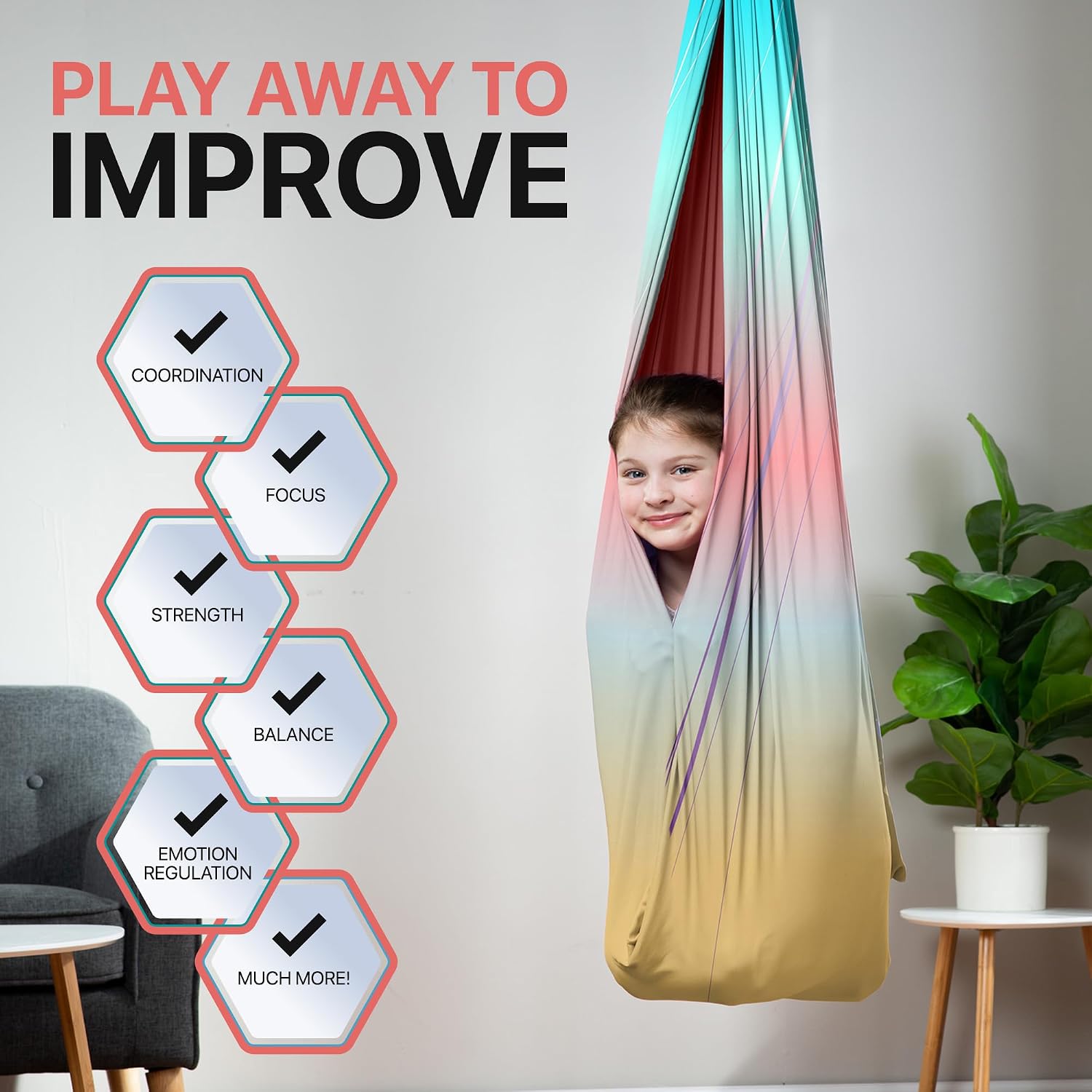
Indoor
$39.99
In stock on Amazon
Check price on AmazonIf you’re a home-clinic OT working out of leased space, or a family in a rental with a landlord who won’t approve ceiling penetrations, a stand is often your only compliant option. The IDEA Partnership’s overview document Assistive Technology and Sensory Supports Under IDEA notes that removable, non-destructive equipment is frequently the prerequisite for home-based early intervention programs funded through Part C — a consideration that makes portability a functional requirement rather than a preference.
For this buyer profile, a mid-tier A-frame or H-frame stand rated to 200 lb static — available in the $220–$450 range from institutional suppliers including Abilitations and Fun and Function — paired with a quality swivel ($25–$60) is the correct budget-tier specification. Prioritize any stand that publishes a dynamic load figure, even if the number is modest; a stated dynamic rating signals that the manufacturer has tested under motion, not just resting weight.
Indoor
$39.99
In stock on Amazon
Check price on AmazonH3: The Multi-Site Practitioner and Portable Sensory Station Operator
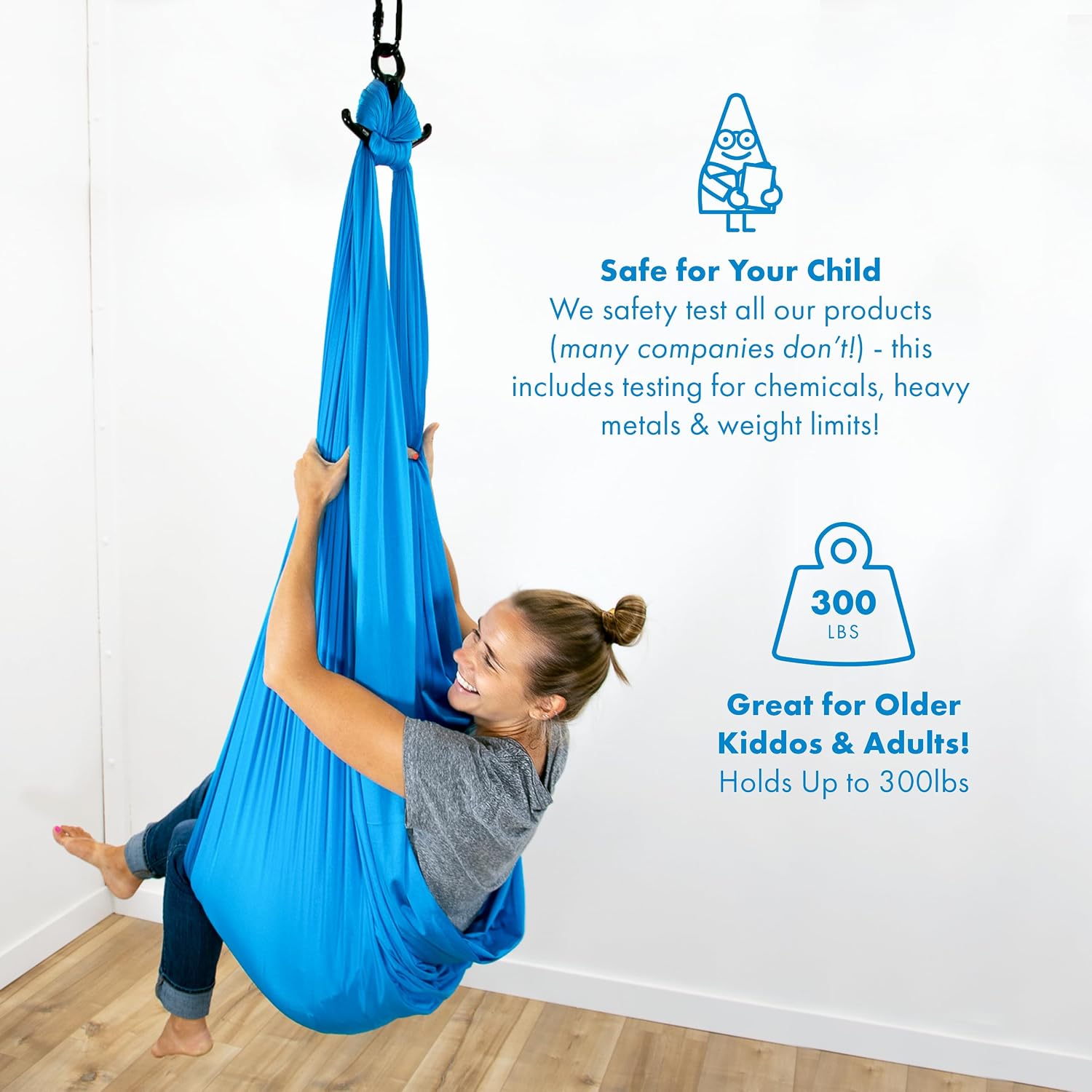
Harkla
$99.99
In stock on Amazon
Check price on AmazonPrivate-practice therapists who rotate between a home office and a clinic satellite location, or pediatric daycares that rearrange their sensory spaces seasonally, report consistent value from stands precisely because the swing travels with the setup. For this buyer, the decision variable is frame rigidity under repeated assembly cycles — cheaper stands develop joint play after 20–30 reassemblies, which degrades the dynamic load tolerance the frame was originally rated for.
Mid-tier institutional steel stands from Southpaw Enterprises and TFH Special Needs (per their current product load-rating documentation for modular swing frames) publish dynamic ratings and are designed for repeated breakdown and reassembly. These run $550–$900 for the frame alone. Add a locking swivel rated to match or exceed the frame’s dynamic figure, and you have a complete portable system for $600–$960.
The honest ceiling-height limitation applies here: most commercial freestanding stands top out at 8–8.5 feet of clearance, which limits arc length. For net swings and platform swings requiring longer arcs for deeper proprioceptive input, this constraint matters. Understood.org’s resource Sensory Processing: What You Need to Know notes that many early-intervention vestibular protocols involve slow, linear movement — the load and arc profile that freestanding hardware handles most reliably, and a useful reminder that shorter arcs are clinically appropriate for a significant portion of the population these stands serve.
Harkla
$99.99
In stock on Amazon
Check price on AmazonH3: The Dedicated Sensory Room with 10+ Weekly Users
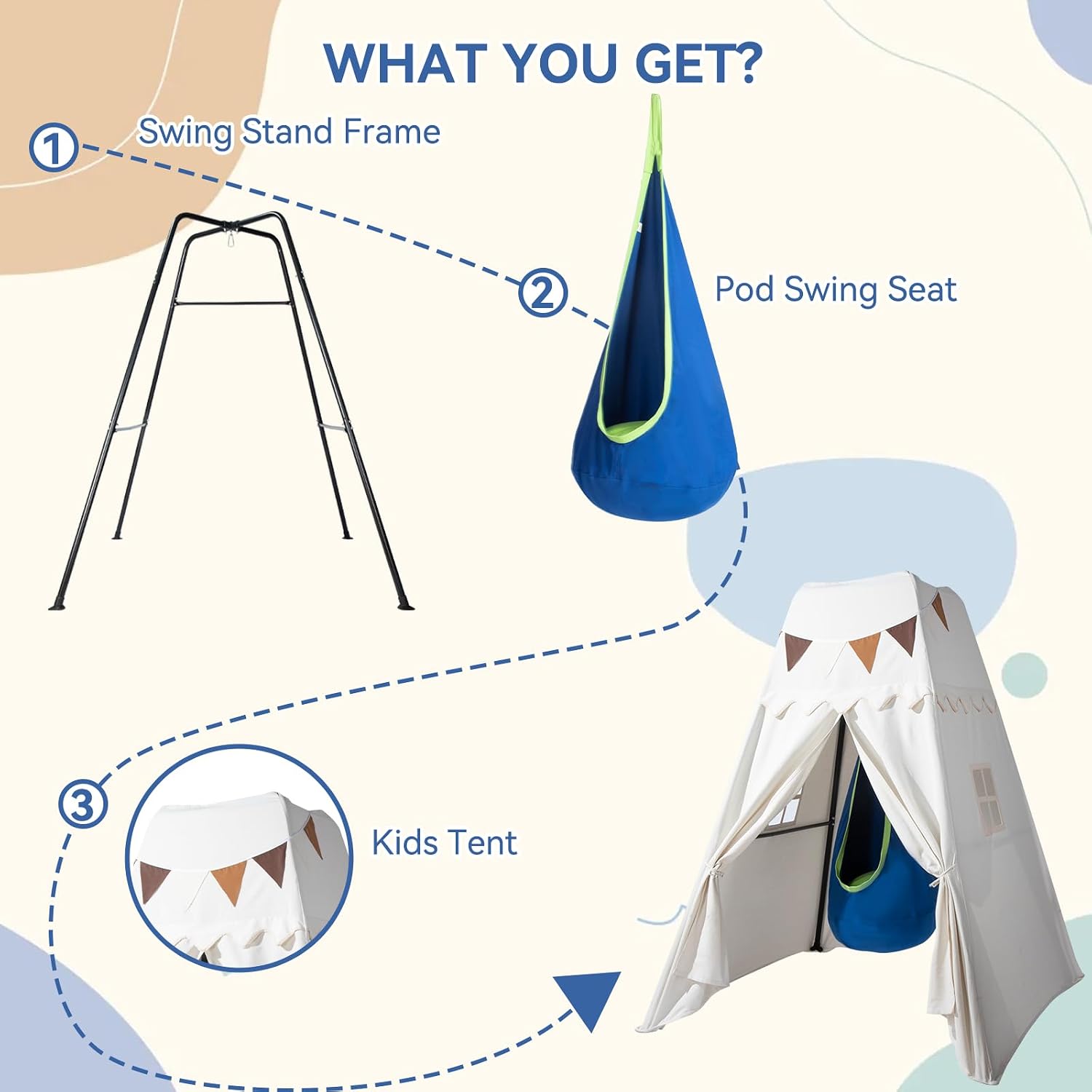
Swing
$149.99
In stock on Amazon
Check price on AmazonFor practitioners building out a dedicated institutional sensory room — whether in a clinic, a school, or a pediatric hospital unit — the real specification isn’t “stand or ceiling” in isolation. It’s how to configure a space that serves multiple users across a day, supports multiple swing types, and accommodates staff workflows. At this tier, freestanding stands serve a secondary role at best: overflow capacity, portable satellite stations, or home-program equipment sent back with families to extend clinic work into the daily routine.
The primary specification for a room expected to serve 10 or more users per week is a ceiling-mount beam or track system — essentially a structural track mounted to ceiling joists that allows the swing attachment point to slide laterally along the room. FlagHouse Therapeutic Products’ Sensory Room Planning Guide (institutional edition, 2024–2025 catalog) recommends obtaining written structural sign-off from a licensed contractor or structural engineer before finalizing any ceiling-mount specification in a purchase order, and documents beam system configurations as the standard for multi-user institutional rooms. Beam system hardware from FlagHouse, Southpaw Enterprises, and TFH Special Needs runs $800–$2,500 before installation — the premium specification that delivers full dynamic load performance with meaningful positional flexibility.
Swing
$149.99
In stock on Amazon
Check price on AmazonCeiling Mounts: The Performance Standard, With Real Prerequisites
If your use case allows it, a properly installed ceiling mount is the superior clinical setup. Here’s why — and where the “if your use case allows it” clause does real work.
The performance case: Ceiling mounts installed into structural joists, beams, or poured concrete transfer load directly into the building’s structure. When specified correctly, they support the highest dynamic load ratings available. TFH Special Needs’ heavy-duty ceiling plate systems, per the company’s published product load-rating documentation, are rated to 440 lb dynamic — suitable for adolescent and adult users and high-arc active protocols. That capacity enables a wider range of therapeutic applications: longer-arc platform swings, lycra pod swings requiring full 360-degree rotation, and hammock systems where the user is fully supine.
Ceiling mounts also eliminate the footprint problem. A freestanding stand occupies floor space with its legs and bracing — often a 6×6-foot footprint or larger. A ceiling mount returns that square footage to the room, which matters enormously in the clinic and school sensory rooms where a 12×14-foot room is already doing significant work.
The prerequisites that gate this decision:
Structural verification. This is non-negotiable. A structural engineer or licensed contractor must confirm that the ceiling framing can support the intended dynamic load. In residential settings, standard framing is often adequate for single-point mounts up to 250–300 lb dynamic with appropriate hardware, but this varies by span, lumber grade, and existing load — it cannot be eyeballed. The FlagHouse Sensory Room Planning Guide specifically documents written structural sign-off as a prerequisite before any ceiling-mount PO is finalized in an institutional setting.
Landlord and lease compliance. Ceiling penetrations are structural modifications. In leased clinic space, this typically requires landlord written approval and may require restoration at lease end. Get this in writing before the installation contract is signed.
Installation cost. Hardware alone for a commercial ceiling mount runs $120–$400, but the true cost includes a licensed installer and potentially a structural engineer’s review fee. Budget $400–$1,200 in total installed cost for a single-point ceiling mount in a commercial space; more for multi-point beam systems.
Insurance and institutional compliance. For school districts and pediatric hospitals specifying sensory rooms under IDEA or ARP funding, ceiling-mount hardware must typically meet the facility’s equipment specification standards. The IDEA Partnership’s Assistive Technology and Sensory Supports Under IDEA overview notes that equipment installed in school environments is subject to the same facilities compliance review as other structural modifications — procurement officers often need dynamic load rating documentation before a purchase order clears. The AOTA’s Occupational Therapy Practice Framework, 4th Edition additionally frames the structural evaluation of vestibular intervention environments as a professional clinical responsibility, not merely an administrative one.
The Decision Rule: If X, Then Y
After walking through the spec landscape and institutional requirements, the tradeoff resolves to a clean set of conditions:
Renter, leaseholder, or space where ceiling penetration isn’t permitted → freestanding stand is your only compliant path. Prioritize stands with published dynamic load ratings (not just static), and buy the highest-rated swivel the budget allows. This is the budget-pick pathway.
Own the space or have written landlord approval, users over 100 lb, or protocols requiring long-arc or full-rotation swings → ceiling mount is the correct clinical specification. Budget for structural verification and licensed installation; skipping either step introduces liability that no warranty covers. This is the mid-tier-to-premium pathway depending on single-point versus beam configuration.
Dedicated institutional sensory room with 10+ weekly users → ceiling-mount beam or track system from a commercial-grade vendor. Require published dynamic load ratings in the product documentation and obtain the facilities department’s written sign-off before the PO is issued. This is the premium-pick pathway.
Home-clinic OT or prosumer buyer rotating locations or serving lighter users → a freestanding stand in the $350–$600 range with a documented dynamic rating delivers 80% of the clinical utility at a fraction of the installation complexity. Reassess when your caseload or user weight profile changes.
The swing itself is the therapy. The mount is the infrastructure that makes it safe to deliver. Get the infrastructure decision right first, and the product selection follows naturally.